
GLP-1 pills vs injections compares oral and injectable GLP-1 medications for weight management and type 2 diabetes. While both approaches act on GLP-1 receptors, their effectiveness, absorption, dosing schedules, and approved indications may differ. This guide examines oral GLP-1 vs injectable GLP-1 treatments, including semaglutide pills and injections, clinical weight-loss results, side effects, convenience, and treatment costs.
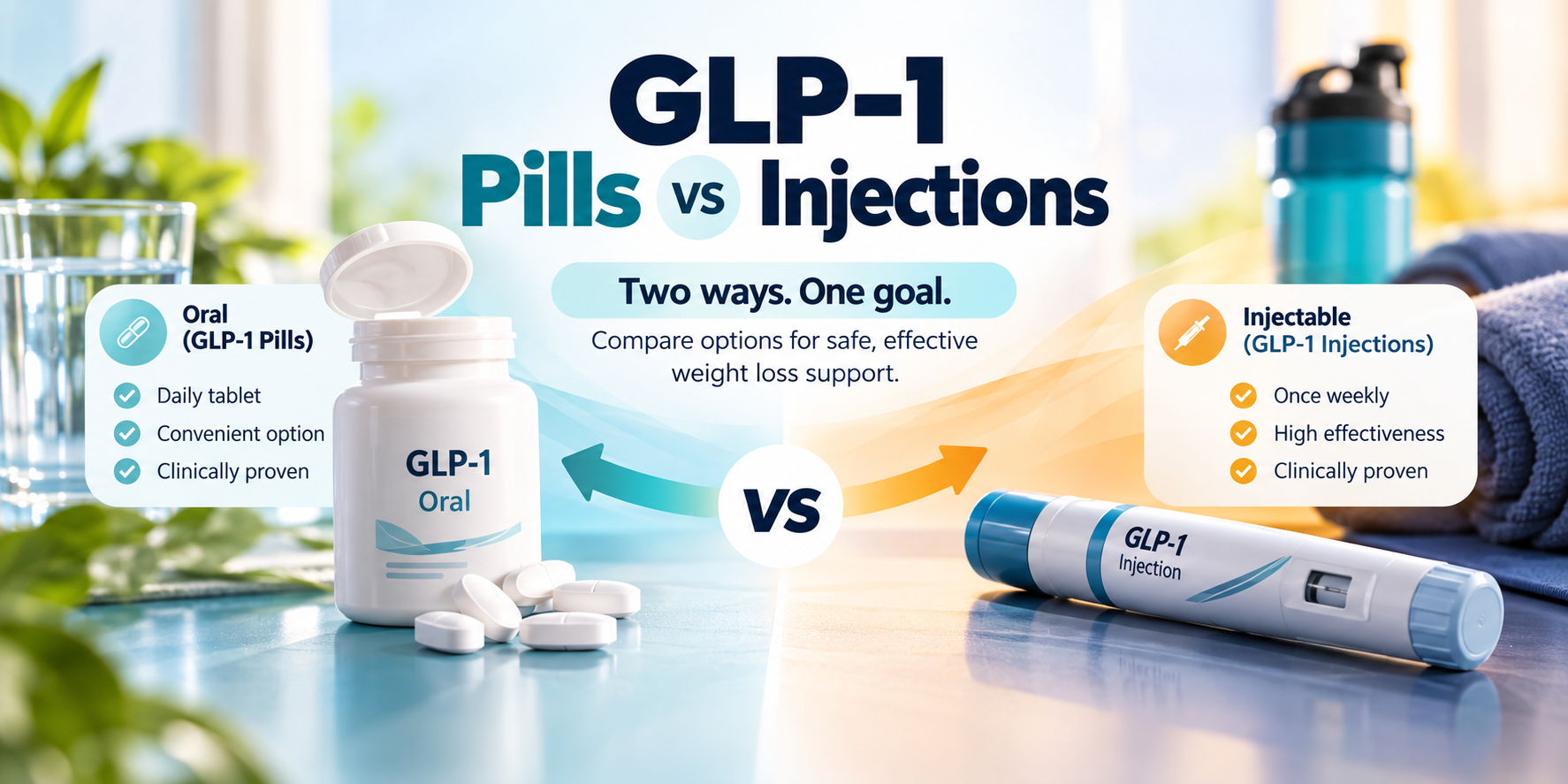
The main difference between GLP-1 pills vs injections is the way the medication is administered. Oral GLP-1 medications are swallowed as tablets, while injectable GLP-1 treatments are delivered beneath the skin. Both approaches can support blood sugar management and, with appropriate products, weight management, but dosing schedules, absorption, clinical evidence and approved indications vary.
Oral GLP-1 receptor agonist formulations
Injectable GLP-1 receptor agonist formulations
| Feature | GLP-1 Pills | GLP-1 Injections |
|---|---|---|
| Administration | Oral tablet | Subcutaneous injection |
| Examples | Oral semaglutide, including Rybelsus | Ozempic, Wegovy, Saxenda and other injectable products |
| Drug class | GLP-1 receptor agonists | GLP-1 receptor agonists |
| Absorption | Absorbed through the digestive system, with formulation-specific requirements | Absorbed following injection beneath the skin |
| Dosing schedule | Typically once daily for oral semaglutide | Once daily or once weekly, depending on the product |
| Primary use | Product-specific indications, including type 2 diabetes | Product-specific indications, including type 2 diabetes and chronic weight management |
| Weight loss | Certain oral semaglutide formulations have demonstrated clinically meaningful weight reduction in trials | Several injectable GLP-1 medications have demonstrated substantial weight reduction in clinical trials |
| Blood sugar | Approved oral GLP-1 treatments can improve glycemic control in eligible patients | Approved injectable GLP-1 treatments can improve glycemic control |
| Common side effects | Nausea, vomiting, diarrhea, constipation and other gastrointestinal symptoms | Similar gastrointestinal effects; injection-site reactions may also occur |
| Convenience | Avoids injections, but administration instructions may be restrictive | Requires injections, but weekly options offer less frequent administration |
| Cost | Varies by medication, indication and insurance coverage | Varies by medication, indication and insurance coverage |
Understanding how GLP-1 pills vs injections work helps explain the differences between oral and injectable treatment. Both oral semaglutide and injectable semaglutide activate GLP-1 receptors, which influence blood sugar regulation, appetite and gastric emptying. The main distinction is how each formulation enters and is absorbed by the body. Other injectable medications may have additional biological targets.
Oral GLP-1 medications are swallowed and absorbed through the digestive system. Oral semaglutide activates GLP-1 receptors , helping regulate glucose-dependent insulin secretion, glucagon release, gastric emptying and appetite. Absorption depends on the formulation, and some tablets have specific administration requirements.
Injectable GLP-1 medications are delivered under the skin and absorbed into the bloodstream. Injectable semaglutide activates GLP-1 receptors through the same biological pathway as oral semaglutide. However, injectable treatments are not all identical: tirzepatide also activates GIP receptors. Dosing schedules differ by medication.
When comparing GLP-1 pills vs injections, weight loss effectiveness is a major question. Both oral and injectable semaglutide have demonstrated meaningful results in clinical trials. However, differences in dose, formulation and study design make it important to interpret the evidence carefully.
Average body-weight reduction at 68 weeks in two separate placebo-controlled trials. The bars illustrate published results, not a direct treatment comparison.
50 mg once daily · 68 weeks
2.4 mg once weekly · 68 weeks
Important study context: OASIS 1 and STEP 1 were independent clinical trials, not a head-to-head study of oral versus injectable semaglutide. Their results cannot establish that the two formulations have equivalent effectiveness. The reported percentages apply to the specific doses, study populations and trial methods used.
In OASIS 1, oral semaglutide 50 mg produced an estimated mean body-weight reduction of 15.1% after 68 weeks, compared with 2.4% for placebo. This demonstrates the potential of certain oral GLP-1 formulations, but the result should not be applied to every GLP-1 pill or dosage.
In STEP 1, once-weekly injectable semaglutide 2.4 mg produced a mean body-weight reduction of 14.9% after 68 weeks, compared with 2.4% for placebo. Injectable GLP-1 treatments have substantial clinical evidence, although effectiveness varies across individual medications and doses.
Are GLP-1 pills as effective as injections for weight loss? Clinical research indicates that certain oral GLP-1 formulations can achieve substantial weight reductions, while injectable GLP-1 medications have also demonstrated significant effects. The results above should not be interpreted as proof that one delivery method is superior. In a GLP-1 pills vs injections comparison, the specific medication, formulation, approved indication, tolerability and treatment schedule are essential considerations.
When comparing GLP-1 pills vs injections side effects, digestive symptoms are common with both routes of administration. Nausea, vomiting, diarrhea and constipation can occur with oral and injectable GLP-1 medications. The type and frequency of reactions depend on the specific medicine, dose and individual circumstances, rather than the delivery method alone.
Neither route is automatically safer. Important warnings for specific GLP-1 medicines may include pancreatitis, gallbladder problems, dehydration-related kidney injury and severe gastrointestinal reactions. Some products carry boxed warnings about thyroid C-cell tumors observed in rodents and have contraindications involving personal or family history of medullary thyroid carcinoma or MEN2. Risks, precautions and indications differ by product. Consult the current official prescribing information and a qualified healthcare professional.
Overall, the difference between GLP-1 pills and injections is not simply which causes fewer side effects. Oral formulations may have specific food and timing instructions, while injections can cause local injection-site reactions. Digestive tolerability and other safety considerations vary by medication and dose. A fair comparison of oral vs injectable GLP-1 medications should always refer to the safety information for the actual products involved.
One of the most practical differences in the GLP-1 pills vs injections comparison is how each treatment is administered. Oral GLP-1 medications are taken by mouth, while injectable GLP-1 medications are delivered through subcutaneous injections. However, dosing frequency, food restrictions and administration requirements depend on the specific product.
Oral formulations · product-specific schedules
Injectable formulations · daily or weekly
Oral and injectable GLP-1 medications are not automatically interchangeable, even when they contain the same active ingredient. Formulation, absorption, approved indication and dosing schedules can differ. Treatment changes should follow product-specific prescribing information and guidance from a qualified healthcare professional.
When comparing GLP-1 pills vs injections cost, the route of administration alone does not determine which treatment is more affordable. Prices vary by medication, formulation, insurance coverage, prescribed indication and pharmacy. Both oral and injectable GLP-1 treatments may involve substantial out-of-pocket expenses, depending on individual circumstances.
Oral GLP-1 formulations
Injectable GLP-1 formulations
Not necessarily. There is no universal price advantage for GLP-1 pills vs injections. Comparing the actual prescribed products, insurance benefits and available savings is more useful than comparing delivery methods alone. Prices and coverage can change over time.
These GLP-1 pills vs injections FAQs answer common questions about weight loss effectiveness, oral versus injectable semaglutide and whether GLP-1 pills offer the same benefits as injections.
Some oral GLP-1 formulations have demonstrated substantial average weight reductions in clinical trials. However, effectiveness depends on the specific medication, dose and study population. Results from separate trials cannot establish that GLP-1 pills are equally effective as injections. Direct comparative evidence is needed to determine how particular oral and injectable treatments perform against each other.
Oral and injectable semaglutide contain the same active ingredient, but they use different delivery methods and formulations. Oral semaglutide is taken by mouth, while injectable semaglutide is administered subcutaneously. Their absorption, dosing schedules and approved indications can differ, so they should not be considered automatically interchangeable.
Not necessarily. Both oral and injectable GLP-1 medications can cause gastrointestinal side effects, including nausea, vomiting, diarrhea and constipation. Injectable formulations may also cause injection-site reactions. The frequency and severity of side effects depend on the individual product, dose and patient characteristics, rather than the administration route alone.
This FAQ provides general educational information and does not replace current product labeling or guidance from a qualified healthcare professional.
This GLP-1 pills vs injections comparison draws on recent clinical research, regulatory documentation and official medication information covering oral and injectable semaglutide, effectiveness, administration, safety and treatment differences.
GLP Versus provides general educational information only. This content is not medical advice and should not be used to diagnose, treat or prevent a medical condition or replace guidance from a qualified healthcare professional. Oral and injectable GLP-1 medications have different dosing instructions, approved indications and safety considerations. Results from separate clinical trials do not establish comparative effectiveness.