GLP-1 Comparison

Wegovy vs Ozempic: Key Differences Explained

Wegovy vs Ozempic: both medications contain semaglutide, but they differ in their approved uses, dosing regimens, and clinical evidence. This evidence-based Ozempic vs Wegovy comparison explores weight loss effectiveness, side effects, treatment formulations, cost, and insurance coverage. Learn why these medications are prescribed for different purposes and how to interpret their clinical results accurately.

9 min read Updated October 2026 Educational guide
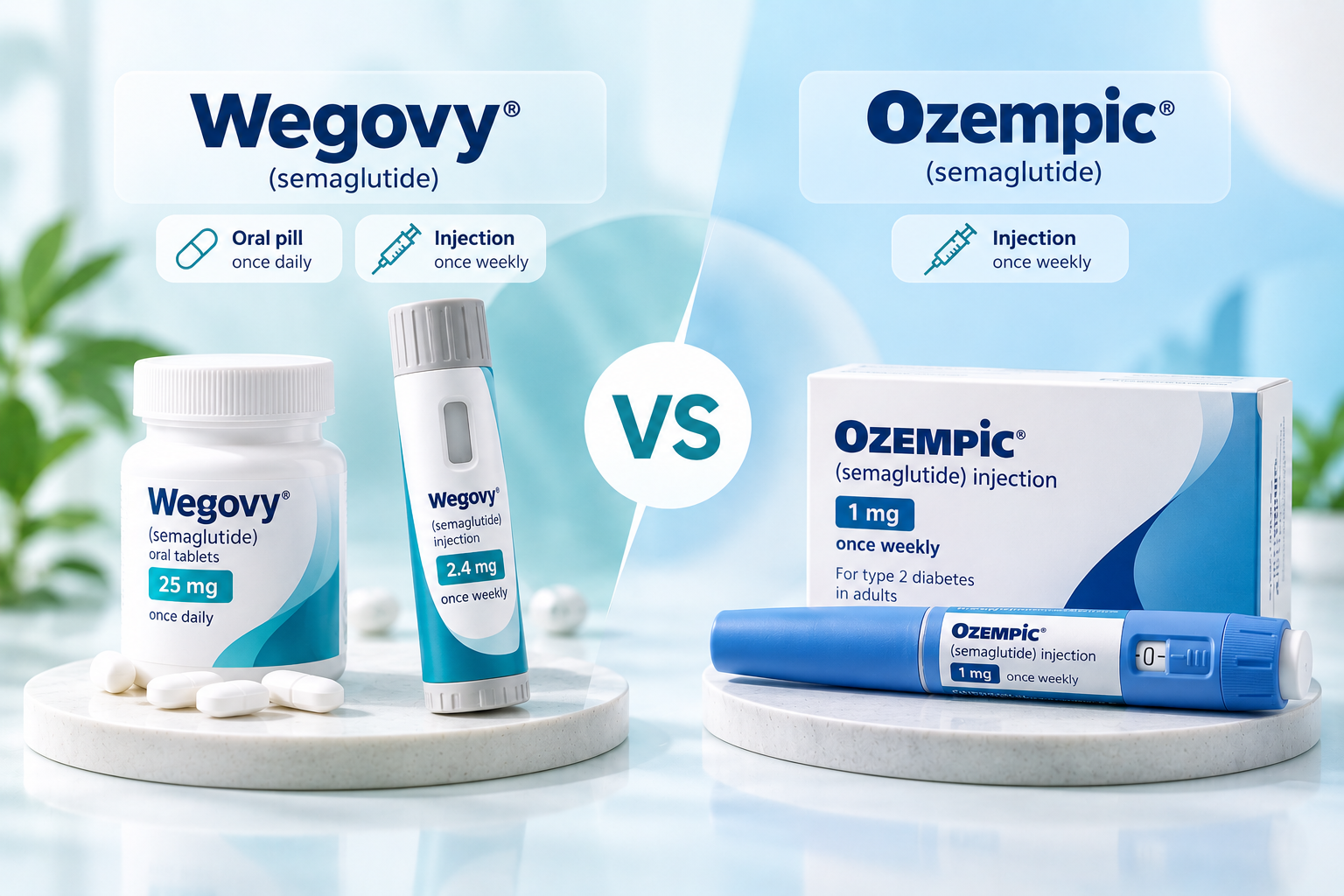
Wegovy vs Ozempic comparison showing Wegovy oral and injectable formulations alongside Ozempic injection

Wegovy vs Ozempic: Quick Summary

  • Wegovy and Ozempic both contain semaglutide. Both belong to the GLP-1 receptor agonist class, but have different approved uses. Wegovy focuses on weight management in eligible patients, while Ozempic is primarily used for type 2 diabetes.
  • Weight loss and metabolic outcomes vary by dose and patient population. Both treatments can affect appetite, blood sugar and body weight, but separate clinical trial results should not be treated as direct head-to-head comparisons.
  • Safety, treatment goals and insurance coverage matter. Wegovy and Ozempic share common gastrointestinal side effects and important safety warnings. The appropriate option depends on medical history, approved indications and individual needs.

Wegovy vs Ozempic at a glance

Understanding Wegovy vs Ozempic starts with one important similarity: both medications contain semaglutide, a GLP-1 receptor agonist. However, they have different approved indications, dosing schedules and treatment goals. This Ozempic vs Wegovy overview compares their primary uses, clinical evidence, administration, potential side effects and insurance coverage.

W

Wegovy

Semaglutide — GLP-1 receptor agonist

Active ingredient Semaglutide
Primary treatment focus Chronic weight management in eligible patients
Clinical focus Weight-management outcomes, with additional approved uses for certain eligible patients
O

Ozempic

Semaglutide — GLP-1 receptor agonist

Active ingredient Semaglutide
Primary treatment focus Blood sugar management in adults with type 2 diabetes
Clinical focus Glycemic control, with additional cardiovascular and kidney-related indications in eligible patients
Feature Wegovy Ozempic
Classification Brand-name GLP-1 receptor agonist containing semaglutide Brand-name GLP-1 receptor agonist containing semaglutide
Primary treatment focus Chronic weight management in eligible patients Type 2 diabetes management in adults
Active ingredient Semaglutide Semaglutide
How they work Activates GLP-1 receptors, affecting appetite and glucose regulation Activates GLP-1 receptors through the same general mechanism
Approved uses Weight management and additional indications in eligible patients Type 2 diabetes management and certain cardiovascular and kidney-related indications
Weight loss Studied specifically for chronic weight management Weight reduction may occur during diabetes treatment
Blood sugar control Can improve glycemic measures in studied populations Approved to improve glycemic control in adults with type 2 diabetes
Administration Once-weekly subcutaneous injection Once-weekly subcutaneous injection
Dosing Product-specific dose escalation and maintenance schedules Product-specific dose escalation and maintenance schedules
Common side effects Nausea, vomiting, diarrhea and constipation Nausea, vomiting, diarrhea and constipation
Clinical evidence Studied in weight-management trials, including the STEP program Studied in type 2 diabetes trials, including the SUSTAIN program
Cost and coverage Depend on indication, eligibility and insurance plan Depend on indication, eligibility and insurance plan

Wegovy vs Ozempic: Treatment Goals & Approved Uses

One of the most important differences in Wegovy vs Ozempic is their approved indications. Both contain semaglutide and activate the same GLP-1 receptors, but they are marketed for different primary treatment goals. Wegovy is primarily associated with chronic weight management, while Ozempic is primarily used to manage type 2 diabetes. Both products also have additional approved indications for certain eligible patients.

Wegovy

Weight management
Semaglutide
Supports chronic weight management in eligible patients
VS

Ozempic

Type 2 diabetes
Semaglutide
Improves blood sugar control in adults with type 2 diabetes

What is Wegovy approved for?

Wegovy is a semaglutide-based GLP-1 medication with approved uses that include chronic weight management in eligible patients. In the United States, its approved indications also include reducing certain cardiovascular risks in eligible adults. Eligibility depends on the specific indication and current prescribing information.

What is Ozempic approved for?

Ozempic is a semaglutide-based GLP-1 medication primarily approved to improve blood sugar control in adults with type 2 diabetes. Its US indications also include reducing certain cardiovascular and kidney risks in eligible adults with type 2 diabetes. Ozempic is not specifically approved for chronic weight management.

Wegovy vs Ozempic: Clinical Evidence

Clinical research helps explain the differences between Wegovy and Ozempic. Although both contain semaglutide, their pivotal studies investigated different patient populations, treatment goals and dosing regimens. Wegovy's major weight-management evidence comes from the STEP clinical trial program, while Ozempic's type 2 diabetes evidence includes the SUSTAIN program.

Wegovy Evidence

STEP Clinical Trial Program

The STEP trials evaluated semaglutide for weight management in populations with overweight or obesity. These studies examined changes in body weight alongside other health-related outcomes.

  • STEP 1: Evaluated once-weekly semaglutide 2.4 mg versus placebo in adults with overweight or obesity without diabetes.
  • Primary focus: Percentage change in body weight over the study period.
  • Clinical relevance: Provides evidence supporting semaglutide-based chronic weight management.
Ozempic Evidence

SUSTAIN Clinical Trial Program

The SUSTAIN trials investigated injectable semaglutide in adults with type 2 diabetes. Their main outcomes commonly included blood sugar control, with body weight assessed as an additional outcome.

  • SUSTAIN studies: Compared semaglutide with placebo or other diabetes treatments across different study designs.
  • Primary focus: Changes in HbA1c and other diabetes-related outcomes.
  • Clinical relevance: Supports the evidence base for Ozempic in type 2 diabetes.
Evidence feature Wegovy Ozempic
Major trial program STEP SUSTAIN
Main population Adults with overweight or obesity; eligibility varied by study Adults with type 2 diabetes
Primary research focus Chronic weight management Glycemic control and diabetes outcomes
Outcomes studied Body weight, cardiometabolic measures and other outcomes HbA1c, body weight and diabetes-related outcomes
Semaglutide doses Often 2.4 mg weekly in pivotal weight-management trials Product- and trial-specific doses used for type 2 diabetes
Interpretation Evidence for weight-management indications Evidence for diabetes-related indications

Important context: STEP and SUSTAIN were not designed as a direct Wegovy-versus-Ozempic comparison. Differences in trial populations, doses, duration and study endpoints mean that results should not be compared as though they came from a single head-to-head trial. Clinical evidence should always be interpreted alongside the current prescribing information.

Wegovy vs Ozempic: Weight Loss & Effectiveness

When comparing Wegovy vs Ozempic for weight loss, it is important to distinguish their clinical trial results and approved treatment goals. Both contain semaglutide, but pivotal studies used different doses, populations and primary endpoints. Wegovy was specifically evaluated for chronic weight management, whereas Ozempic was primarily studied for type 2 diabetes management.

Wegovy — STEP 1

Weight Management Evidence

−14.9%

Mean body-weight change at 68 weeks with semaglutide 2.4 mg once weekly, alongside lifestyle intervention, in STEP 1.

In STEP 1, adults with overweight or obesity without diabetes receiving semaglutide 2.4 mg experienced an average weight reduction of approximately 14.9% at 68 weeks, compared with approximately 2.4% in the placebo group.

Ozempic — SUSTAIN 1

Type 2 Diabetes Evidence

−1.55%

Mean HbA1c change at 30 weeks with semaglutide 1.0 mg once weekly in SUSTAIN 1.

In SUSTAIN 1, semaglutide improved blood sugar control in adults with type 2 diabetes. The 1.0 mg group achieved an average HbA1c reduction of approximately 1.55 percentage points. Participants also experienced weight loss, but HbA1c was the primary efficacy endpoint.

Clinical measure Wegovy evidence Ozempic evidence
Example trial STEP 1 SUSTAIN 1
Studied population Adults with overweight or obesity without diabetes Adults with type 2 diabetes
Dose highlighted 2.4 mg weekly 1.0 mg weekly
Study duration 68 weeks 30 weeks
Primary outcome Percentage change in body weight Change in HbA1c
Highlighted result Approximately 14.9% mean weight reduction Approximately 1.55 percentage-point HbA1c reduction
Clinical interpretation Evidence supporting chronic weight management Evidence supporting glycemic control in type 2 diabetes

What Do These Results Mean?

The figures above represent different clinical outcomes: percentage body-weight change for Wegovy and HbA1c change for Ozempic. They should not be interpreted as a direct measure of which medication produces greater weight loss. Trial populations, treatment doses and follow-up periods differed. Individual outcomes also vary, and treatment decisions require consideration of the approved indication and medical history.

Wegovy vs Ozempic: Side Effects & Safety

When comparing Wegovy vs Ozempic side effects, both medications have similar safety considerations because they contain the same active ingredient, semaglutide. Gastrointestinal symptoms are among the most frequently reported adverse reactions, although their frequency can vary by dose, study population and treatment regimen.

Wegovy

Common Wegovy Side Effects

Gastrointestinal adverse reactions are commonly reported with Wegovy. Some symptoms occur during dose escalation and may improve over time.

  • Nausea
  • Diarrhea
  • Vomiting
  • Constipation
  • Abdominal discomfort
Ozempic

Common Ozempic Side Effects

Ozempic has a similar gastrointestinal side-effect profile. The reported frequency depends on the dose and characteristics of the patients included in clinical studies.

  • Nausea
  • Vomiting
  • Diarrhea
  • Abdominal pain
  • Constipation
Safety consideration Wegovy Ozempic
Gastrointestinal symptoms Common Common
Pancreatitis Important warning Important warning
Gallbladder problems Recognized risk Recognized risk
Dehydration-related kidney injury Possible, especially with severe GI symptoms Possible, especially with severe GI symptoms
Hypoglycemia Risk may increase with certain diabetes medications Risk may increase with insulin or sulfonylureas
Thyroid C-cell tumor warning Boxed warning Boxed warning
Diabetic retinopathy complications Relevant monitoring considerations in patients with diabetes Warning and monitoring considerations in patients with diabetes

Important Safety Information

Wegovy and Ozempic carry boxed warnings concerning thyroid C-cell tumors observed in rodents; the relevance of these findings to humans is unknown. They are contraindicated in people with a personal or family history of medullary thyroid carcinoma or Multiple Endocrine Neoplasia syndrome type 2 (MEN2). Other important precautions include pancreatitis, gallbladder disease, severe gastrointestinal reactions and dehydration-related kidney injury. Patients should discuss symptoms, medical history and medication interactions with a qualified healthcare professional. This comparison is educational and does not replace medical advice.

Wegovy vs Ozempic: Cost & Insurance Coverage

The cost of Wegovy vs Ozempic can vary significantly depending on insurance coverage, eligibility, pharmacy and available manufacturer programs. Because these medications have different approved indications, insurance plans may apply different coverage requirements. Actual out-of-pocket expenses should be confirmed with the insurer, pharmacy or manufacturer.

Wegovy

Wegovy Cost & Coverage

Wegovy coverage often depends on whether a health plan includes benefits for weight-management medications and whether the patient meets the plan's clinical requirements.

  • Coverage: Varies by insurer and plan.
  • Prior authorization: May be required.
  • Out-of-pocket cost: Depends on plan benefits, pharmacy and eligibility.
  • Savings programs: Eligibility and terms may change.
Ozempic

Ozempic Cost & Coverage

Ozempic coverage is commonly evaluated under a health plan's diabetes medication benefits. Requirements may include documentation of type 2 diabetes or other plan-specific criteria.

  • Coverage: Depends on formulary placement and medical eligibility.
  • Prior authorization: May apply.
  • Out-of-pocket cost: Varies with deductibles, copayments and plan rules.
  • Savings programs: Subject to manufacturer terms and eligibility.
Cost factor Wegovy Ozempic
Primary coverage context Weight-management and other applicable approved indications Type 2 diabetes and other applicable approved indications
Insurance coverage Plan-dependent Plan-dependent
Prior authorization May be required May be required
Cash-pay pricing Verify current pricing with the pharmacy or manufacturer Verify current pricing with the pharmacy or manufacturer
Savings assistance May be available to eligible patients May be available to eligible patients
Final patient cost Depends on individual coverage and program eligibility Depends on individual coverage and program eligibility

Pricing note: Prices, insurance rules and manufacturer assistance programs change over time. This section does not provide a personalized cost estimate or guarantee coverage. GLP Versus provides educational information and does not prescribe medication. If affiliate links are added elsewhere on this website, they should be clearly identified near the relevant recommendation.

Wegovy vs Ozempic: How They Work

One of the most important facts in the Wegovy vs Ozempic comparison is that both medications contain the same active ingredient: semaglutide. Semaglutide belongs to a class of medications called GLP-1 receptor agonists. It mimics the action of the naturally occurring hormone GLP-1, influencing appetite regulation, blood glucose control and gastric emptying.

Wegovy

Semaglutide for Weight Management

Wegovy acts on GLP-1 receptors involved in appetite regulation and energy intake. Its effects can help reduce hunger and support weight management alongside appropriate lifestyle measures.

Semaglutide
GLP-1 Receptor Activation
Appetite & Satiety Regulation
Ozempic

Semaglutide for Blood Sugar Control

Ozempic activates the same GLP-1 receptors. In people with type 2 diabetes, semaglutide supports glucose-dependent insulin secretion and reduces inappropriate glucagon release, helping improve blood sugar control.

Semaglutide
GLP-1 Receptor Activation
Glucose-Dependent Insulin & Glucagon Effects

Same Active Ingredient

Wegovy and Ozempic contain semaglutide and act through the same GLP-1 receptor pathway. They are not different drug classes. Their main distinctions include approved indications, dosing regimens and product-specific labeling.

Different Treatment Goals

Although the underlying mechanism is shared, Wegovy is commonly associated with chronic weight management, while Ozempic is primarily used in type 2 diabetes care. Both also have additional labeled uses for certain eligible patients.

Key takeaway: Wegovy and Ozempic do not work through separate biological mechanisms. Both use semaglutide to activate GLP-1 receptors. The practical differences concern their approved indications, dosing schedules and clinical evidence rather than a different active ingredient. Neither product should be combined with another semaglutide-containing medication.

Wegovy vs Ozempic FAQs

These Wegovy vs Ozempic FAQs explain the most common questions about their active ingredient, approved uses, weight loss evidence, effectiveness, side effects and insurance coverage. Although both medications contain semaglutide, they are not interchangeable in every clinical situation.

What is the main difference between Wegovy and Ozempic?

The main difference between Wegovy and Ozempic is their approved uses and product-specific dosing. Both contain semaglutide, a GLP-1 receptor agonist. Wegovy is primarily associated with chronic weight management, while Ozempic is primarily prescribed for type 2 diabetes and has additional approved risk-reduction indications. Their formulations, labeling and clinical evidence also differ.

Is Wegovy better than Ozempic for weight loss?

Wegovy has extensive clinical evidence supporting its use for chronic weight management. In the STEP 1 trial, semaglutide 2.4 mg was associated with an average body weight reduction of approximately 14.9% after 68 weeks in the studied population. Ozempic can also be associated with weight reduction, but its major clinical trials primarily evaluated outcomes in people with type 2 diabetes. Results from separate trials should not be treated as a direct head-to-head comparison.

Do Wegovy and Ozempic contain the same medication?

Yes. Both Wegovy and Ozempic contain semaglutide, which activates GLP-1 receptors involved in blood glucose regulation and appetite signaling. However, sharing the same active ingredient does not mean the products have identical approved indications, dosing regimens or prescribing instructions. They should not be considered automatically interchangeable.

Does insurance cover Wegovy and Ozempic differently?

Yes. Insurance coverage can differ because Wegovy and Ozempic have different approved indications. A health plan may apply separate eligibility rules, prior authorization requirements, formularies or cost-sharing arrangements to each product. Coverage depends on the insurer, individual plan, medical circumstances and applicable policies. Neither medication is guaranteed to be covered.

This FAQ provides general educational information and does not replace current Wegovy or Ozempic prescribing information or guidance from a qualified healthcare professional.

Sources & References

This Wegovy vs Ozempic comparison draws on official prescribing information and peer-reviewed clinical research covering semaglutide, weight management, type 2 diabetes, cardiovascular outcomes and the clinical evidence behind both medications.

Medical disclaimer

GLP Versus provides general educational information only. This Wegovy vs Ozempic comparison is not medical advice and should not be used to diagnose, treat or prevent a medical condition, or as a substitute for advice from a qualified healthcare professional. Both products contain semaglutide but have distinct prescribing information. Approved indications, warnings and treatment recommendations may change over time.

Last updated: October 2026
Défiler vers le haut