
GLP-1 vs semaglutide is a common comparison for people exploring medications for weight loss and type 2 diabetes. However, semaglutide is itself a GLP-1 receptor agonist, meaning it belongs to the broader GLP-1 medication class. This semaglutide vs GLP-1 guide explains how semaglutide compares with other GLP-1 treatments, including differences in clinical effectiveness, weight loss results, side effects, dosing, and treatment costs.
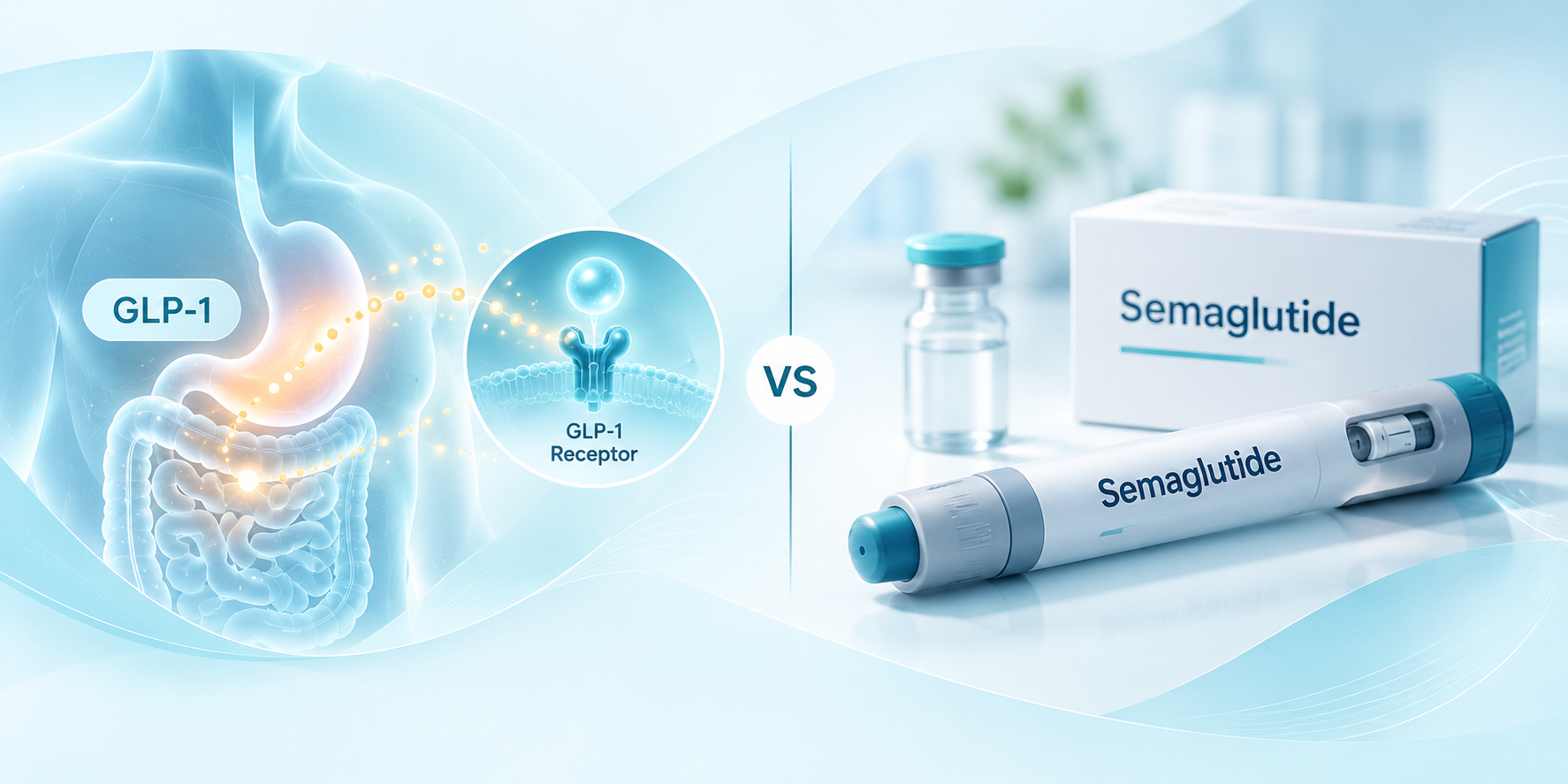
Understanding GLP-1 vs semaglutide starts with one important distinction: semaglutide is itself a GLP-1 receptor agonist. GLP-1 medications represent a broader treatment family, while semaglutide is one specific drug within that family. This semaglutide vs GLP-1 overview compares their classification, approved uses, administration, weight-management evidence and potential side effects.
Broader medication class
Specific GLP-1 receptor agonist
| Feature | GLP-1 Medications | Semaglutide |
|---|---|---|
| Classification | A class of medications that activate GLP-1 receptors | One medication within the GLP-1 receptor agonist class |
| Examples | Semaglutide, liraglutide, dulaglutide and exenatide | Ozempic, Wegovy and Rybelsus are semaglutide brands |
| How they work | Mimic GLP-1 activity to influence insulin secretion, glucagon release and gastric emptying | Activates GLP-1 receptors through the same general mechanism |
| Approved uses | Vary by drug and product; may include type 2 diabetes and chronic weight management | Product-specific indications include type 2 diabetes and chronic weight management |
| Weight loss | Effectiveness varies considerably between medications and doses | Substantial weight reduction demonstrated in clinical trials at studied doses |
| Blood sugar control | Several approved treatments improve glycemic control in type 2 diabetes | Improves glycemic control in eligible patients with type 2 diabetes |
| Administration | Injectable or oral, depending on the product | Available in injectable and oral formulations |
| Dosing frequency | Daily or weekly, depending on the medication | Typically weekly for injections and daily for oral formulations |
| Common side effects | Nausea, vomiting, diarrhea and constipation are common class-related effects | Similar gastrointestinal side effects, with frequency varying by dose and formulation |
| Clinical evidence | Supported by multiple clinical trials across different GLP-1 medications | Supported by major semaglutide clinical trial programs, including SUSTAIN and STEP |
| Cost and coverage | Depend on the medication, insurance plan and approved indication | Depend on the semaglutide brand, formulation, indication and coverage |
Understanding the mechanisms behind GLP-1 vs semaglutide helps explain how these treatments are related. GLP-1 receptor agonists activate pathways involved in blood sugar control, digestion and appetite regulation. Semaglutide is a specific medication within this class, not a separate treatment category. It targets the same GLP-1 receptor but has molecular properties that support longer-lasting activity.
GLP-1 receptor agonists mimic the action of the naturally occurring GLP-1 hormone by activating the GLP-1 receptor . This pathway can increase glucose-dependent insulin secretion, reduce glucagon secretion, slow gastric emptying and influence appetite regulation. The strength and duration of these effects vary between medications.
Semaglutide selectively activates the GLP-1 receptor , influencing insulin secretion, glucagon regulation and appetite-related signaling. Its modified molecular structure extends its activity compared with natural GLP-1. Injectable semaglutide has an elimination half-life of approximately one week, supporting once-weekly administration for approved injectable formulations.
When comparing GLP-1 vs semaglutide for weight loss, it is important to distinguish between the broader GLP-1 receptor agonist class and semaglutide, one specific medication within that class. Several GLP-1 therapies have demonstrated weight reduction in clinical trials, but results differ depending on the medication, dose, duration and study population. The STEP clinical trial program provides important evidence on semaglutide's effects on body weight.
Several GLP-1 receptor agonists have demonstrated weight reduction in clinical trials. For example, the SCALE Obesity and Prediabetes trial reported an average body weight reduction of approximately 8.0% with liraglutide 3.0 mg at 56 weeks, compared with 2.6% for placebo. These results apply to the specific drug, dose and population studied, not to the entire GLP-1 class.
In the STEP 1 trial, adults with overweight or obesity without diabetes receiving semaglutide 2.4 mg once weekly experienced an average body weight reduction of 14.9% at 68 weeks, compared with 2.4% for placebo. The trial evaluated semaglutide alongside lifestyle intervention. Results may differ across doses, indications and patient populations.
Overall, a semaglutide vs GLP-1 weight-loss comparison should focus on specific medications rather than treating the GLP-1 class as a single alternative. Semaglutide has substantial clinical evidence supporting its effects on body weight, but effectiveness varies between GLP-1 therapies. Approved indications, safety considerations and individual medical circumstances also matter when evaluating treatment options.
When comparing GLP-1 vs semaglutide side effects, there is considerable overlap because semaglutide is itself a GLP-1 receptor agonist. Nausea, vomiting, diarrhea and constipation are common gastrointestinal reactions associated with this medication class. However, the frequency and severity of adverse reactions vary by individual medication, formulation, dose and patient characteristics.
GLP-1 receptor agonists, including semaglutide, have important warnings, precautions and contraindications. Semaglutide products carry a boxed warning concerning thyroid C-cell tumors observed in rodents and are contraindicated in people with a personal or family history of medullary thyroid carcinoma or Multiple Endocrine Neoplasia syndrome type 2. Other important risks include pancreatitis, gallbladder problems, dehydration-related kidney injury and severe gastrointestinal reactions. Hypoglycemia risk may increase when used with insulin or sulfonylureas. Official prescribing information and guidance from a qualified healthcare professional are essential.
In a semaglutide vs GLP-1 side-effects comparison, gastrointestinal symptoms are common across many treatments in this class, but safety profiles are not identical. The risks and contraindications associated with one GLP-1 medication should not automatically be applied to every other product. Likewise, safety information for semaglutide should be evaluated according to its specific formulation and approved indication.
When comparing GLP-1 vs semaglutide dosing and administration, the key distinction is between a broad medication class and a specific GLP-1 receptor agonist. Different GLP-1 medications have their own formulations, administration routes and schedules. Semaglutide is available in prescription products with formulation-specific dosing requirements. Dosing schedules also depend on the approved indication and product label.
Different products and schedules
Specific GLP-1 receptor agonist
In a semaglutide vs GLP-1 dosing comparison, doses and administration schedules should not be considered interchangeable. Semaglutide belongs to the GLP-1 receptor agonist class, but its prescription products have specific dosing instructions. Different semaglutide formulations are not automatically interchangeable. Always consult the official prescribing information and a qualified healthcare professional.
Comparing GLP-1 vs semaglutide costs means comparing a medication class with one of its members. Semaglutide is a GLP-1 receptor agonist, and its cost depends on the brand, formulation, pharmacy, insurance plan and eligibility for savings programs. Other GLP-1 medications may have different prices and coverage rules.
Costs vary by product
Ozempic / Wegovy / Rybelsus
In a semaglutide vs GLP-1 cost comparison, always check the specific brand and formulation. Semaglutide is part of the GLP-1 class, not a separate category. Prices, insurance coverage and savings programs change; list price may differ from actual out-of-pocket cost.
The most important difference in GLP-1 vs semaglutide is that GLP-1 receptor agonists are a medication class, while semaglutide is one specific medication within that class. Semaglutide activates the GLP-1 receptor, so comparing it with GLP-1 medications as a whole is not a direct drug-versus-drug comparison. Meaningful differences in weight loss, safety, dosing and cost depend on which specific treatment is being evaluated.
Evidence about semaglutide and other GLP-1 receptor agonists should be interpreted according to the specific medication, formulation, dose, clinical indication, study design and population evaluated. This comparison is for educational purposes and does not replace individualized medical advice.
These GLP-1 vs semaglutide FAQs explain the relationship between GLP-1 receptor agonists and semaglutide, including how they work, weight loss evidence, available formulations and important differences between medications in the GLP-1 class.
GLP-1 is a naturally occurring hormone, while GLP-1 receptor agonists are medications that mimic some of its effects. Semaglutide is one specific GLP-1 receptor agonist. Therefore, GLP-1 vs semaglutide is not a comparison between two separate medication classes.
Yes. Semaglutide belongs to the GLP-1 receptor agonist class. It activates GLP-1 receptors involved in blood glucose regulation, appetite signaling and gastric emptying. Other medications in the class include liraglutide and dulaglutide.
Clinical trials have shown substantial average weight reduction with semaglutide 2.4 mg in studied populations. Some head-to-head evidence, including the STEP 8 trial, found greater average weight reduction with semaglutide 2.4 mg than with liraglutide 3.0 mg. However, effectiveness varies by medication, dose, study population and treatment duration. Semaglutide should not be assumed to outperform every GLP-1 treatment.
No. Although GLP-1 receptor agonists share a common receptor pathway, individual medications differ in their active ingredients, approved indications, formulations, dosing schedules, clinical evidence, safety information and costs. Semaglutide is one member of this broader medication class, not another name for every GLP-1 treatment.
This FAQ provides general educational information and does not replace current product labeling or guidance from a qualified healthcare professional.
This GLP-1 vs semaglutide comparison draws on official prescribing information and peer-reviewed clinical research covering GLP-1 receptor agonists, semaglutide, weight loss outcomes and differences between medications within the GLP-1 class.
GLP Versus provides general educational information only. The content on this page is not medical advice and should not be used to diagnose, treat or prevent a medical condition, or as a substitute for advice from a qualified healthcare professional. Medication indications, warnings and prescribing information may change over time.