Home › Comparisons › GLP-1 vs Metformin
GLP-1 Comparison

GLP-1 vs Metformin: Which Is Better?

GLP-1 vs Metformin compares two different approaches to managing blood sugar and metabolic health. Metformin is a widely used oral diabetes medication, while GLP-1 therapies can support blood sugar control and often produce greater weight loss. Compare how they work, their benefits, side effects, and when GLP-1 or metformin may be considered.

9 min read
Updated October 2026
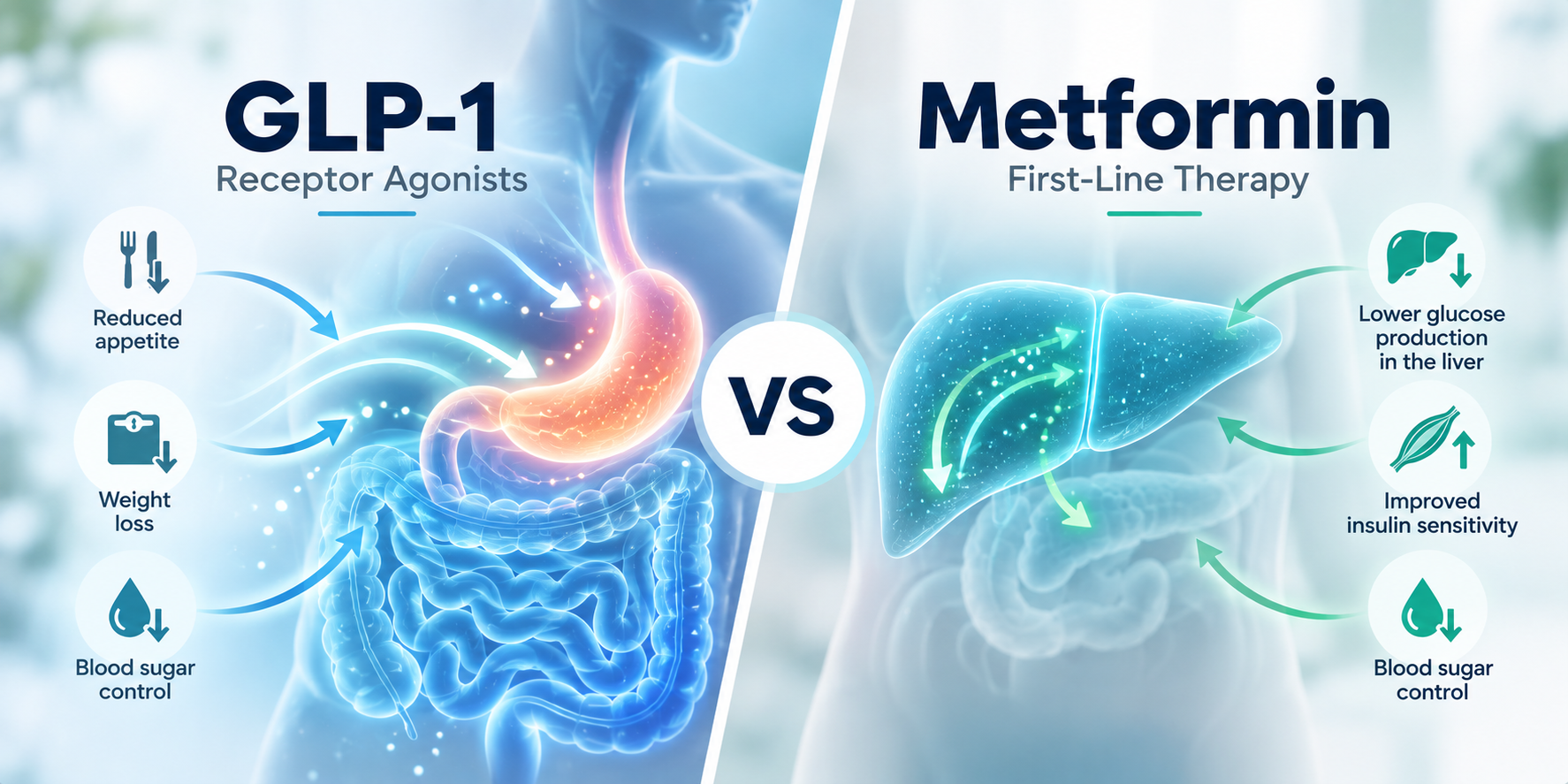
GLP-1 vs Metformin comparison for blood sugar control and weight management

GLP-1 vs Metformin: Quick summary

  • Metformin is not a GLP-1 medication. Metformin is a biguanide used primarily to improve blood sugar control, while GLP-1 receptor agonists act through the GLP-1 pathway and can affect insulin release, glucagon, appetite and digestion.
  • Both approaches can be used in type 2 diabetes management. In a Metformin vs GLP-1 comparison, however, their effects on body weight differ: GLP-1 therapies generally produce greater weight loss, although results depend on the specific medication and individual.
  • When substantial weight loss is an important goal, GLP-1 therapies may offer an advantage over metformin. Metformin remains an established, generally lower-cost oral treatment, and GLP-1 therapy and metformin may also be used together when clinically appropriate.

GLP-1 vs Metformin at a glance

The main difference in GLP-1 vs Metformin is how the treatments work and the effects they can have on blood sugar, appetite and body weight. Metformin is an established oral biguanide that primarily reduces liver glucose production and improves insulin sensitivity. GLP-1 receptor agonists work through the GLP-1 pathway, influencing glucose-dependent insulin release, glucagon, appetite and digestion. For people who also prioritize meaningful weight loss, GLP-1 therapies may offer an important advantage over metformin.

GLP-1

GLP-1

GLP-1 receptor agonist therapy

How it works Mimics GLP-1 activity to influence insulin, glucagon, appetite and digestion
Blood sugar Can produce substantial improvements in glucose control, depending on the therapy
Weight Often associated with clinically meaningful weight loss, with results varying by medication
VS
MET

Metformin

Biguanide medication

How it works Primarily reduces glucose production by the liver and improves insulin sensitivity
Blood sugar Established treatment for improving blood glucose control in type 2 diabetes
Weight Generally weight-neutral or associated with modest weight loss in some people
Feature GLP-1 Metformin
Drug class GLP-1 receptor agonist Biguanide
Main action Influences glucose-dependent insulin release, glucagon, appetite and digestion Reduces liver glucose production and improves insulin sensitivity
Administration Most are injections; oral semaglutide formulations also exist Oral tablets or liquid
Blood sugar Effective glucose-lowering therapy; effect varies by individual medication Established glucose-lowering treatment, widely used in type 2 diabetes
Appetite Can increase satiety and reduce appetite and food intake Does not primarily work through appetite regulation
Weight loss Generally greater weight-loss potential, depending on the specific GLP-1 therapy Usually modest weight effects compared with GLP-1 therapies
Cost & access Typically more expensive; insurance coverage and access vary Generally inexpensive and widely available
Used together? Yes — a GLP-1 therapy may be prescribed alongside metformin when appropriate Yes — metformin may remain part of treatment when a GLP-1 therapy is added
Key takeaway May offer an advantage when substantial weight loss is a major treatment goal Established, convenient and lower-cost oral option for glucose management
Mechanism of action

How do GLP-1 and Metformin work?

Although both can help manage blood sugar in type 2 diabetes, GLP-1 and metformin work through different biological mechanisms. Understanding this distinction is important when comparing Metformin vs GLP-1, especially because GLP-1 therapies also influence appetite and digestion.

GLP-1

How GLP-1 therapies work

  • 1
    Support glucose-dependent insulin release

    GLP-1 receptor agonists mimic the activity of the natural GLP-1 hormone and can stimulate insulin release when blood glucose is elevated.

  • 2
    Reduce glucagon activity

    They can reduce glucagon secretion, helping limit unnecessary glucose release by the liver.

  • 3
    Influence appetite and digestion

    GLP-1 therapies can slow gastric emptying and increase feelings of fullness, which can reduce food intake and contribute to weight loss.

MET

How Metformin works

  • 1
    Reduces liver glucose production

    A major effect of metformin is reducing the amount of glucose produced and released by the liver.

  • 2
    Improves insulin sensitivity

    Metformin helps the body's tissues respond more effectively to insulin and increases peripheral glucose uptake and use.

  • 3
    Reduces intestinal glucose absorption

    Metformin can also decrease the amount of glucose absorbed from the gastrointestinal tract.

Is Metformin a GLP-1?

No. Metformin is not a GLP-1 receptor agonist. Metformin belongs to the biguanide class and primarily works by reducing hepatic glucose production and improving insulin sensitivity. GLP-1 receptor agonists use a different pathway that affects glucose-dependent insulin secretion, glucagon, digestion and appetite. Because their mechanisms are complementary rather than identical, metformin and a GLP-1 therapy may sometimes be prescribed together.

Treatment effects

GLP-1 vs Metformin for blood sugar and weight loss

Both metformin and GLP-1 receptor agonists can improve blood sugar control in type 2 diabetes, but their effects on body weight are an important difference in the GLP-1 vs Metformin comparison. Metformin has a long history as a glucose-lowering medication, while GLP-1 therapies can combine glucose control with a stronger effect on appetite and weight.

Blood sugar

How do they compare for glucose control?

Both medication classes can lower blood glucose, but they do so through different mechanisms and their effects vary according to the specific treatment, dose and individual response.

GLP-1 therapies Glucose + metabolic effects

GLP-1 receptor agonists can improve glucose control by increasing glucose-dependent insulin secretion and reducing glucagon activity. Their effects differ between individual GLP-1 medications.

Metformin Established option

Metformin lowers blood glucose primarily by reducing glucose production in the liver and improving the body's response to insulin. It remains a widely used treatment for type 2 diabetes.

Weight management

GLP-1 vs Metformin for weight loss

Weight is where the difference between these treatment approaches becomes more noticeable. Metformin may be associated with modest weight reduction in some people, while GLP-1 therapies generally have greater weight-loss potential.

GLP-1 therapies Greater weight-loss potential

By increasing satiety, influencing appetite and slowing gastric emptying, GLP-1 therapies can reduce food intake. The amount of weight lost varies substantially by medication, dose and individual.

Metformin More modest effect

Metformin is not primarily a weight-loss medication. Some people experience modest weight reduction, but its weight effects are generally smaller than those seen with GLP-1 therapies.

Which has the advantage for weight loss?

When weight management is an important treatment goal, GLP-1 therapies generally offer greater weight-loss potential than metformin. That does not mean GLP-1 therapy is automatically the better choice for every person: treatment decisions also depend on diabetes goals, medical history, side effects, cost, access and other individual factors. Metformin may also be used alongside a GLP-1 therapy when clinically appropriate.

Safety & tolerability

GLP-1 vs Metformin side effects

Both GLP-1 receptor agonists and metformin can cause gastrointestinal side effects, especially when treatment is started or doses are changed. However, the specific side-effect profiles differ, which can influence the GLP-1 vs Metformin decision for an individual patient.

GLP-1

GLP-1 side effects

Common effects are mainly gastrointestinal

  • Nausea
  • Vomiting
  • Diarrhea
  • Constipation
  • Abdominal discomfort or pain
  • Reduced appetite
Important: side effects and safety warnings are not identical across every GLP-1 medication. The prescribing information for the specific drug should always be considered.
MET

Metformin side effects

Digestive symptoms are also common

  • Diarrhea
  • Nausea
  • Abdominal discomfort
  • Gas or bloating
  • Reduced appetite in some people
  • Vitamin B12 levels may decrease with longer-term use in some patients
Important: metformin also has uncommon but potentially serious safety considerations, including lactic acidosis in certain higher-risk situations, particularly when significant kidney impairment or other risk factors are present.

Which is easier to tolerate: Metformin or GLP-1?

There is no universal winner for tolerability. Both can cause gastrointestinal symptoms, and individual response varies. Metformin has decades of clinical use and a well-established safety profile, while tolerability can differ between individual GLP-1 medications and doses. The benefits of treatment therefore need to be considered alongside side effects, medical history and other individual risk factors.

Practical comparison

GLP-1 vs Metformin: cost and access

Cost and insurance coverage can be major practical differences when comparing GLP-1 vs Metformin. Generic metformin is widely available and typically inexpensive, while the cost of GLP-1 therapies can vary substantially by medication, insurance coverage, indication and available savings programs.

GLP-1

GLP-1 therapies

Higher cost, coverage varies

Cost

GLP-1 medications can be considerably more expensive than generic metformin, particularly when a specific treatment is not covered by insurance.

Typically higher cost
Insurance

Coverage depends on the specific medication, health plan and approved indication. Some plans may require prior authorization or other eligibility criteria.

Access

Access can differ between GLP-1 medications. Coverage rules, pharmacy availability and eligibility for savings programs can all affect out-of-pocket cost.

MET

Metformin

Low-cost generic option

Cost

Metformin has been available for decades and generic versions are generally inexpensive compared with newer GLP-1 medications.

Cost advantage
Insurance

Generic metformin is widely used for type 2 diabetes and is generally easier to access through standard prescription coverage.

Access

Its generic availability, oral formulation and long history of use make metformin a broadly accessible treatment option.

Which is more affordable: GLP-1 or Metformin?

Metformin generally has a clear cost and access advantage. GLP-1 therapies can offer benefits that metformin does not provide to the same degree, particularly for substantial weight loss, but affordability can become an important part of the decision. Actual out-of-pocket costs depend on the specific GLP-1 medication, its approved use, insurance coverage and any applicable savings or assistance programs.

Combination therapy

GLP-1 vs Metformin: can they be taken together?

The GLP-1 vs Metformin comparison does not always mean choosing one treatment instead of the other. Because they work through different mechanisms, a GLP-1 receptor agonist and metformin may be prescribed together as part of a type 2 diabetes treatment plan when clinically appropriate.

Can GLP-1 and Metformin be taken together?

Yes, GLP-1 therapy and metformin can be prescribed together when clinically appropriate. Metformin primarily reduces glucose production by the liver and improves insulin sensitivity, while GLP-1 receptor agonists work through the GLP-1 pathway to influence glucose-dependent insulin release, glucagon, appetite and digestion. Because these mechanisms are different, the two treatments can play complementary roles.

Why might GLP-1 and Metformin be used together?

1 Additional blood sugar control

A GLP-1 therapy may be added when additional glucose lowering is needed as part of an individualized treatment plan.

2 Complementary mechanisms

Metformin and GLP-1 therapies act through different pathways, so one treatment does not necessarily replace the other.

3 Weight management

GLP-1 therapies generally offer greater weight-loss potential than metformin, which may be relevant when weight management is also an important treatment goal.

Medical Disclaimer

This content is for informational and educational purposes only and is not a substitute for professional medical advice, diagnosis or treatment. Whether GLP-1 therapy, metformin or a combination of both is appropriate depends on individual health factors and should be discussed with a qualified healthcare professional.

Frequently Asked Questions

GLP-1 vs Metformin: FAQ

Common questions about GLP-1 vs Metformin, including how the treatments differ, their effects on weight and blood sugar, and whether they can be used together.

Is Metformin a GLP-1?

No. Metformin is not a GLP-1 receptor agonist. Metformin is a biguanide medication that primarily reduces glucose production by the liver and improves insulin sensitivity. GLP-1 receptor agonists act through the GLP-1 pathway and can influence insulin release, glucagon, appetite and digestion.

What is the main difference between GLP-1 and Metformin?

The main difference in GLP-1 vs Metformin is how they work. Metformin primarily targets liver glucose production and insulin sensitivity, while GLP-1 receptor agonists influence glucose-dependent insulin secretion, glucagon, appetite and digestion. GLP-1 therapies also generally have greater weight-loss potential than metformin.

Which causes more weight loss: GLP-1 or Metformin?

GLP-1 therapies generally produce greater weight loss than metformin. Metformin may lead to modest weight loss in some people, while the amount of weight loss associated with GLP-1 therapy varies substantially depending on the specific medication, dose and individual response.

Can GLP-1 and Metformin be taken together?

Yes. A GLP-1 receptor agonist and metformin can be prescribed together when clinically appropriate. Because the two treatments work through different mechanisms, they may play complementary roles in a type 2 diabetes treatment plan. Whether combination therapy is appropriate depends on individual health factors and should be determined with a healthcare professional.

Is Metformin cheaper than GLP-1 therapy?

Generally, yes. Generic metformin is widely available and typically inexpensive. GLP-1 therapy is usually more costly, although actual out-of-pocket costs vary according to the specific medication, insurance coverage, indication and available assistance or savings programs.

Does GLP-1 replace Metformin?

Not necessarily. GLP-1 therapy does not automatically replace metformin. Depending on treatment goals and individual health factors, a healthcare professional may use metformin alone, a GLP-1 therapy, or both as part of a treatment plan.

Evidence & further reading

Sources & References

This GLP-1 vs Metformin comparison was developed using medical and scientific sources covering their mechanisms, blood sugar effects, weight management, safety and use in type 2 diabetes.

Sources were reviewed for educational purposes. Evidence, recommendations and medication information can change over time; readers should consult qualified healthcare professionals and current prescribing information for individual medical decisions.

Défiler vers le haut